
Eliminating a $1,400 Monthly Payment: How a 72-Year-Old Pierce County Homeowner Used a Reverse Mortgage to Stay Home
Reviewed by Peter Irungu, NMLS #2751063 | Last updated October 23, 2026

Patricia was 72 and living in the Spanaway home she'd owned for 35 years. Her husband had passed three years earlier, and on her single retirement income, the $1,400 monthly mortgage payment was becoming a burden. Her daughter suggested selling, but Patricia didn't want to leave the home where she'd raised her family.
She came to me asking if a reverse mortgage could help. The answer was yes but not in the way she expected. Here's how a Home Equity Conversion Mortgage (HECM) eliminated her monthly payment and let her stay in the home she loved.
The Problem: Payment Pressure on Fixed Income
Patricia's home was worth about $475,000. She owed $118,000 on her existing mortgage with 14 years remaining. Her monthly payment of $1,400 represented about 45% of her monthly retirement income an unsustainable burden that was eating into her ability to pay for groceries, medication, and home maintenance.
She'd considered selling, but the thought of leaving the home where her children grew up and where she'd cared for her husband in his final years was devastating. She needed a way to stay, and the monthly payment was the problem.
A reverse mortgage offered a solution: pay off the existing $118,000 mortgage with a HECM, eliminating the $1,400 monthly payment entirely. Patricia would still own her home, still pay property taxes and insurance, and still maintain the property but the monthly mortgage burden would be gone.
How the HECM Payoff Worked
At 72, Patricia qualified for a HECM that provided enough to pay off her $118,000 existing mortgage and cover the closing costs. The HECM is a reverse mortgage instead of making monthly payments, the loan balance grows over time as interest accrues. But Patricia didn't need monthly income from the loan; she needed to eliminate a payment.
After the HECM paid off her existing mortgage, Patricia's $1,400 monthly payment disappeared. She still paid property taxes (about $320 per month) and homeowners insurance (about $140 per month), but the $1,400 principal and interest payment was gone.
Her total monthly housing cost dropped from about $1,860 to about $460 a savings of $1,400 per month, or $16,800 per year. For a retiree on a fixed income, that's life-changing.
What Patricia Gave Up and What She Kept
The HECM isn't free money. Patricia's loan balance grows over time as interest accrues on the amount she borrowed. When she sells the home, moves out permanently, or passes away, the loan becomes due and the balance will be higher than the $118,000 she originally borrowed.
But because the HECM is a non-recourse loan insured by the FHA, Patricia or her heirs will never owe more than the home is worth when the loan is repaid. If the loan balance exceeds the home's value, the FHA insurance covers the difference. Her heirs won't be on the hook for a debt they can't repay.
What Patricia kept: her home, her independence, and her peace of mind. What she gave up: some of the equity she'd built over 35 years. For her, the trade-off was worth it. Staying in her home was worth more than the equity she'd give up over time.
The Counseling Requirement
Before Patricia could proceed, she completed a session with a HUD-approved housing counselor a mandatory step for every HECM borrower. The counselor walked her through the loan terms, her obligations, the alternatives, and the impact on her estate.
Patricia's daughter sat in on the counseling session and asked tough questions: What happens to the home when Mom passes? What if the loan balance grows beyond the home's value? What are the alternatives? The counselor answered every question honestly including explaining that a reverse mortgage isn't right for everyone.
For Patricia, the counseling confirmed what she already knew: this was the right decision for her situation. She understood the trade-offs, she'd discussed it with her family, and she was making an informed choice to stay in the home she loved.
NEXA Lending, LLC is a private mortgage company and is not affiliated with, endorsed by, or acting on behalf of HUD, FHA, or any government agency. HECM borrowers must complete HUD-approved counseling. This is not a commitment to lend. All loan products, rates, and terms are subject to credit approval and market conditions.
Have questions about your mortgage?
Book a free 15-minute call with Peter no credit pull required.
Related Articles

Reverse Mortgage Myths Debunked: What WA Homeowners 62+ Need to Know
Separating fact from fiction on reverse mortgages including the truth about ownership, repayment, and whether you can lose your home.
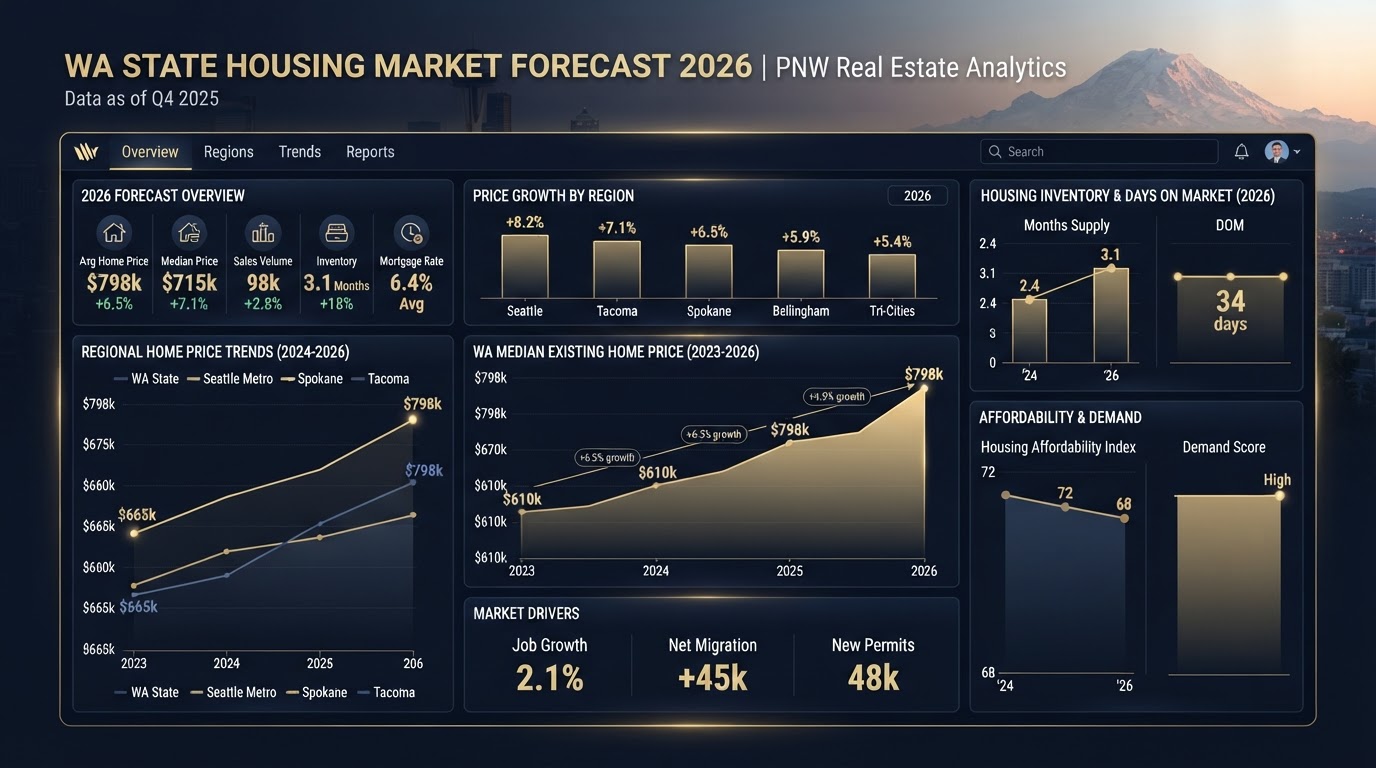
Washington Housing Market 2026: What Buyers and Investors Should Watch
Pierce County and King County trends, interest rate outlook, and what it all means for your next home purchase or investment in 2026.

What Credit Score Do You Really Need for a Mortgage in Washington?
The minimums aren't the whole story. Here's how your credit score actually affects your rate, your options, and your monthly payment in Washington.