
Why Winter Is the Best Time to Buy a Home in Washington (Yes, Even in the Rain)
Reviewed by Peter Irungu, NMLS #2751063 | Last updated October 23, 2026
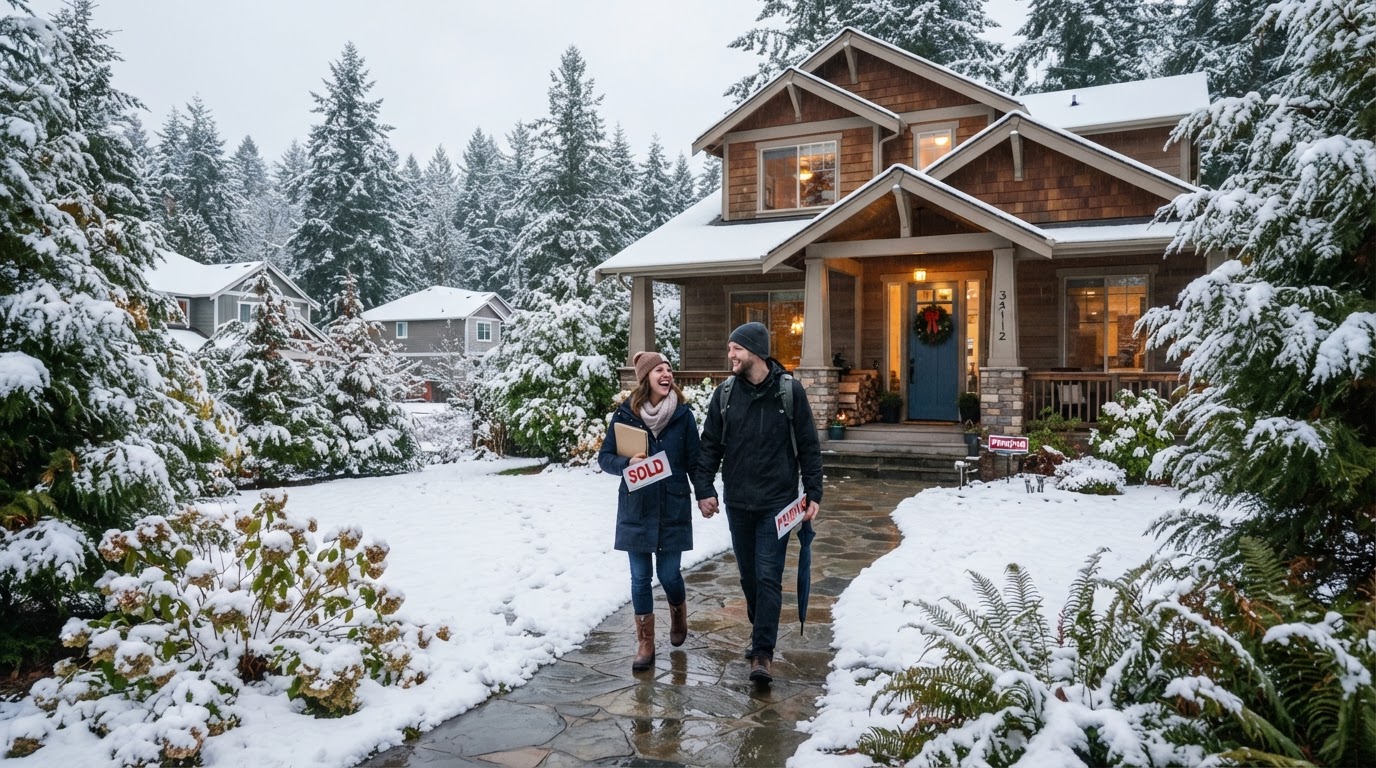
Everyone in Washington knows the script: wait for spring, tour homes when the sun's out, close by summer. It's the most common advice and it's also the reason most buyers end up competing with every other buyer in the state.
Derek and Priya did the opposite. They started house hunting in January, in the rain, in Federal Way and they bought a four-bedroom home for $15,000 less than the comparable spring sale next door would fetch three months later. Here's why winter can be the smartest time to buy in Washington.
Less Competition Means More Leverage
In spring and summer, a well-priced home in Pierce or King County can draw five, ten, even fifteen offers. Buyers waive inspections, offer over asking, and compete on terms. In winter, that same home might draw one or two offers sometimes none. Sellers who list in January are usually motivated. They need to move, not test the market.
Derek and Priya's home had been listed since early December. The sellers were relocating for work and had already bought elsewhere. They were carrying two mortgages and motivated to close quickly. In a spring market, this home would have sold in a weekend. In January, it sat for 38 days and the sellers accepted an offer $15,000 below asking with seller-paid closing costs.
The math was simple: less competition meant Derek and Priya negotiated from a position of strength instead of desperation. They got the home they wanted at a price that made sense, with terms that protected them instead of the seller.
What You Actually See in Winter
The common objection to winter buying is that you can't see the yard, the roof, or the drainage when everything is wet and gray. But that's exactly why winter is valuable: you see the home at its worst. If the roof leaks in January, you'll know before you buy. If the yard turns into a swamp, you'll see it. If the basement has moisture issues, winter rain will reveal them.
In spring, everything looks great. Fresh paint, blooming landscaping, and dry weather hide problems that only surface when the rain returns. A winter inspection tells you the truth. Derek and Priya's inspection caught a small roof leak near a chimney flashing something that would have been invisible in July. They negotiated a $4,000 seller credit for the repair before closing.
The trade-off is that there are fewer homes on the market in winter. Inventory drops from November through February. But the homes that are listed are usually listed for a reason and that reason often works in your favor as a buyer.
Lenders and Inspectors Have More Time
In the spring frenzy, appraisers are backed up, inspectors are booking two weeks out, and lenders are swamped. Everything takes longer, and delays can kill deals. In winter, the same professionals have openings within days. Derek and Priya had their inspection scheduled for the day after their offer was accepted. Their appraisal came back in five days. Their loan closed in 28 days faster than most spring transactions.
That speed matters. When sellers are motivated and want to close quickly, a buyer who can move fast because their lender and inspector have capacity becomes the most attractive offer on the table, even if the price isn't the highest.
I always tell winter buyers: the off-season is when my team can give you the most attention. Your file doesn't sit in a queue. Your questions get answered the same day. Your pre-approval is ready before you tour the first home.
The Real Cost of Waiting for Spring
Here's what most buyers don't calculate: while they wait for spring, prices often rise. In Washington, the median home price typically increases 3% to 6% from January to June. On a $500,000 home, that's $15,000 to $30,000 in appreciation you pay for by waiting plus the higher interest you accrue if rates move.
Derek and Priya bought in January at $465,000. The comparable home next door sold in April for $480,000. Same neighborhood, same floor plan, same condition. They saved $15,000 on price and locked a rate that was 0.25% lower than what spring buyers faced.
Winter isn't for everyone. If you have school-age kids and want to move during summer break, or if you need to sell a home first, the timing may not work. But if you're flexible, buying in the off-season can be the smartest financial decision you make all year. I work with buyers year-round and January is when I see the best deals happen. This is not a commitment to lend. Market conditions vary.
Have questions about your mortgage?
Book a free 15-minute call with Peter no credit pull required.
Related Articles

Reverse Mortgage Myths Debunked: What WA Homeowners 62+ Need to Know
Separating fact from fiction on reverse mortgages including the truth about ownership, repayment, and whether you can lose your home.

Washington Housing Market 2026: What Buyers and Investors Should Watch
Pierce County and King County trends, interest rate outlook, and what it all means for your next home purchase or investment in 2026.

What Credit Score Do You Really Need for a Mortgage in Washington?
The minimums aren't the whole story. Here's how your credit score actually affects your rate, your options, and your monthly payment in Washington.