
The Tacoma Duplex That Paid for Itself: An Investor's First DSCR Loan
Reviewed by Peter Irungu, NMLS #2751063 | Last updated October 23, 2026
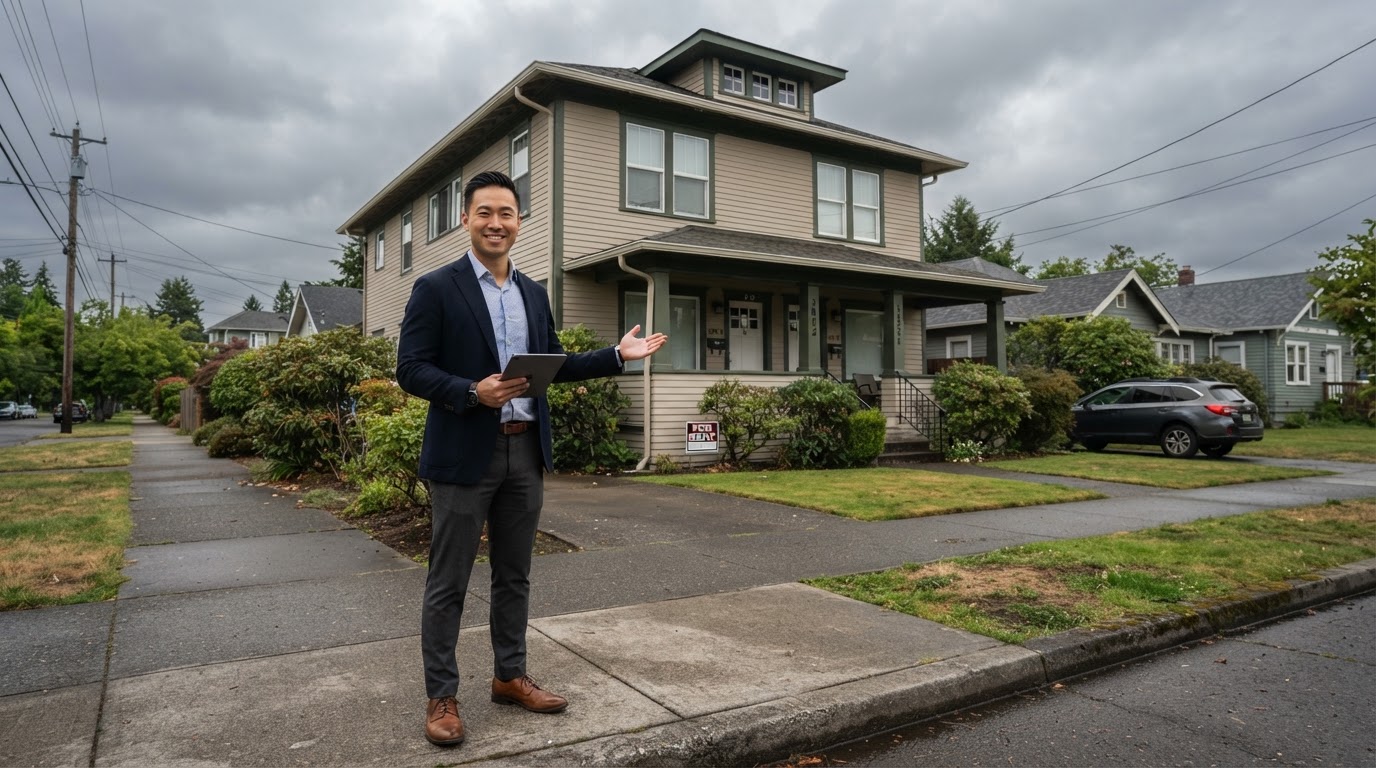
Marcus was 34, a software engineer by day, and he'd been reading about real estate investing for two years. He'd saved $60,000, watched every YouTube video on house hacking, and identified a duplex in Tacoma's Lincoln District that looked like it would cash flow. There was one problem: his personal debt-to-income ratio was already stretched by a car payment and student loans, and no conventional lender would qualify him for another mortgage.
That's when his agent mentioned DSCR loans. Here's how Marcus went from 'I can't qualify' to closing on his first investment property in 29 days.
The Problem with Conventional Investment Loans
Conventional investment property loans look at your personal income, your personal debts, and your personal credit. If your debt-to-income ratio is already high even if you have a great salary and strong credit you hit a wall. The lender sees your existing obligations and says: 'You can't afford another payment.'
Marcus was making $115,000 a year, had a 738 credit score, and $60,000 in savings. On paper, he was a strong borrower. But his existing debts a $480 car payment, $320 in student loans, and $1,100 in rent pushed his DTI to 42%. Most conventional lenders cap investment property borrowers at 43-45% DTI. He was right at the ceiling, with no room for a new mortgage payment.
The duplex he wanted was listed at $385,000. With 20% down ($77,000), he'd need a $308,000 loan. The monthly payment on that plus taxes, insurance, and the HOA dues the complex charged would push his DTI well past any conventional lender's limit.
How the DSCR Loan Changed the Math
A DSCR (Debt Service Coverage Ratio) loan doesn't look at Marcus's personal income. It looks at the property's rental income. If the rent the duplex can generate covers the debt service the mortgage payment plus taxes and insurance the loan qualifies. Marcus's personal DTI doesn't enter the equation.
The Tacoma duplex had two units. Based on the rent survey I ran (comparable units in the Lincoln District were renting for $1,500-$1,650 per month), the gross monthly rental income was about $3,100. The total monthly debt service principal, interest, taxes, and insurance on the $308,000 loan was about $2,650.
That gave the property a DSCR of 1.17 meaning the rental income covered the debt service with a 17% cushion. Most DSCR lenders want a ratio of at least 1.0, and many prefer 1.15 or higher. Marcus's duplex cleared the bar comfortably.
What Marcus Needed to Qualify
The DSCR loan requirements were straightforward: 20% down ($77,000, which Marcus had saved), a minimum credit score of 660 (his was 738), and a lease or rent survey showing the property's income potential. No personal tax returns. No W-2s. No personal income verification.
The trade-off: DSCR loan rates are typically 0.75 to 1.5 percentage points higher than conventional investment property rates, and there may be a prepayment penalty for the first few years. For Marcus, the ability to qualify at all and to start building a rental portfolio was worth the higher rate.
He could refinance into a conventional loan later, once the property had a year of rental history on his tax returns and his personal DTI had room. Or he could keep the DSCR loan and use the same program for his next property.
The Numbers After Closing
Marcus closed on the duplex at $385,000 with $77,000 down. His monthly debt service mortgage, taxes, and insurance was $2,650. He rented both units: one for $1,525, one for $1,575. Gross monthly income: $3,100.
After setting aside 10% for vacancy and 8% for maintenance reserves, his net operating income was about $2,540 which meant the property was just barely cash flow positive in year one. Not a windfall, but a foot in the door. And the property was appreciating in a neighborhood where prices had been rising steadily.
More importantly: Marcus's personal DTI hadn't changed. The DSCR loan didn't show up as personal debt on his credit profile. When he was ready to buy his second investment property 14 months later, he qualified for another DSCR loan on the same terms because the first property's debt was serviced by its own rental income, not by Marcus's salary.
Is a DSCR Loan Right for Your First Investment?
DSCR loans are built for investors not owner-occupants. If you're buying a property to live in, a conventional loan or FHA loan will almost always be cheaper. But if you're building a rental portfolio and your personal income is already spoken for, a DSCR loan can be the key that unlocks the first door.
The right strategy depends on your goals, your existing debt, the property you're considering, and the rental market in your target neighborhood. I'll help you model the cash flow, calculate the DSCR, and compare it against conventional financing so you can decide with real numbers not assumptions.
All loan products, interest rates, and terms are subject to credit approval and market conditions. This is not a commitment to lend. Programs, rates, terms, and conditions are subject to change without notice.
Have questions about your mortgage?
Book a free 15-minute call with Peter no credit pull required.
Related Articles

DSCR Loans for Real Estate Investors in Pierce County: No Income Docs Required
How DSCR loans help Pierce County investors qualify on rental income instead of tax returns ideal for self-employed buyers growing a portfolio.

Cash Flow or Appreciation? How Pierce County Investors Should Choose in 2026
Rental yields, price growth, and DSCR loan strategies for real estate investors building a portfolio in Pierce County this year.

From One Duplex to Four Properties: How a Pierce County Investor Scaled His Rental Portfolio with DSCR Loans
A real estate investor shares how DSCR loans let him grow from one rental property to four in three years without his personal income becoming a bottleneck.