
House Hacking in Tacoma: How a First-Time Buyer Used an FHA Loan to Live for Free in a Duplex
Reviewed by Peter Irungu, NMLS #2751063 | Last updated October 23, 2026
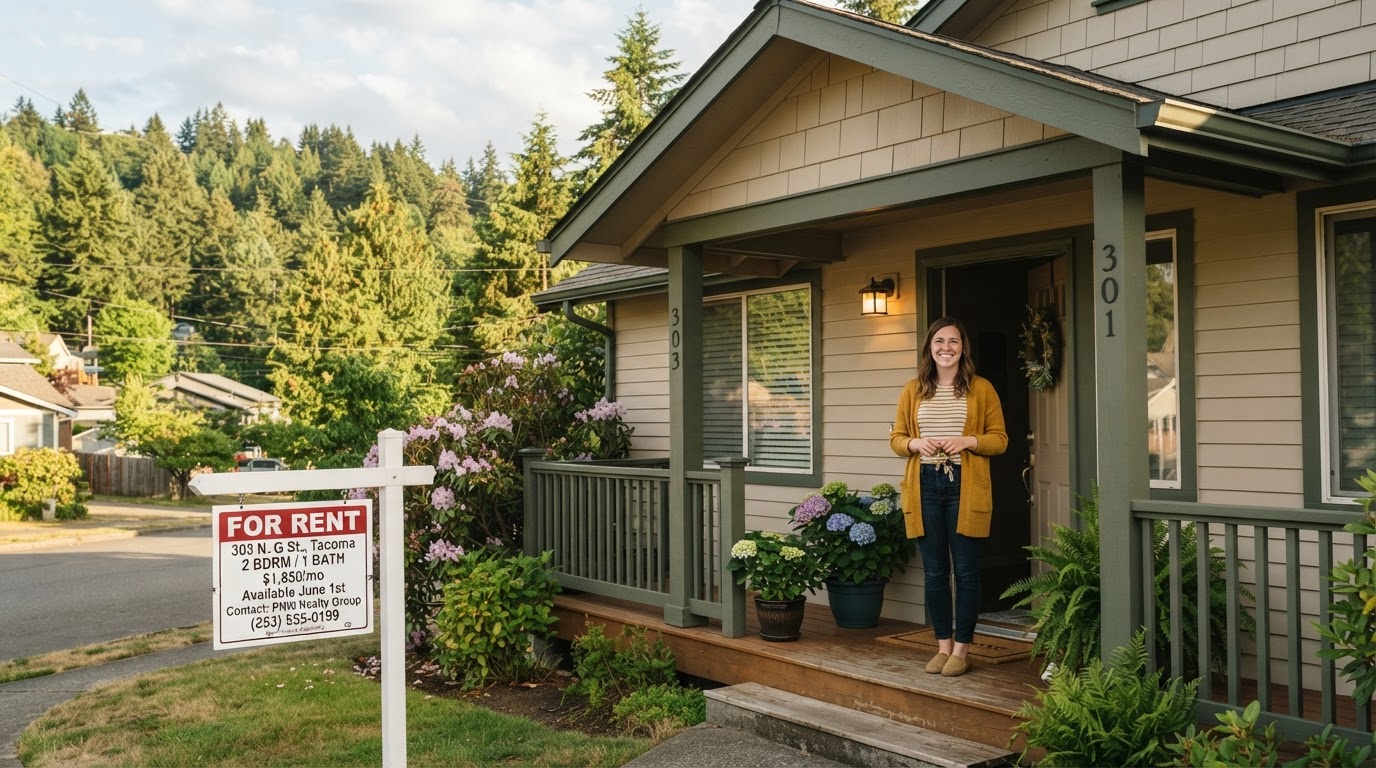
Maria was 29 and teaching fifth grade in Tacoma. Her rent on a one-bedroom apartment near Point Defiance had just jumped to $1,850 a month, and she was watching her savings get eaten alive by someone else's mortgage. She'd heard about 'house hacking' on a podcast but assumed it required a six-figure income and a real estate license.
It doesn't. Here's how Maria bought a duplex in Tacoma's East Side neighborhood with an FHA loan, 3.5% down, and a tenant whose rent now covers 70% of her monthly payment.
What House Hacking Actually Means
House hacking is simple: you buy a property with two to four units, live in one, and rent the others. The rental income offsets your mortgage, taxes, and insurance sometimes enough that your housing cost drops to near zero. It's one of the oldest wealth-building strategies in real estate, and it's completely legal and common.
The part most people don't know: you can do it with an FHA loan. FHA financing allows you to buy a two- to four-unit property with just 3.5% down, as long as you live in one of the units as your primary residence for at least one year. That's the key occupancy. You have to actually live there.
Maria found a duplex listed at $465,000 in Tacoma's East Side. Both units were two-bedroom, one-bath. She planned to live in one and rent the other for $1,600 a month based on comparable rentals in the area.
The Numbers That Made It Work
With an FHA loan at 3.5% down, Maria's loan amount was about $448,725 after the upfront mortgage insurance premium was financed in. Her total monthly housing payment principal, interest, property taxes, insurance, and mortgage insurance came to roughly $3,420.
That sounds like a lot for a teacher making $72,000. But here's the math that changed everything: her rental unit brought in $1,600 a month. That left $1,820 out of pocket which was less than she'd been paying in rent for her apartment. She was living in a unit she owned, building equity, and paying less per month than she had as a renter.
And because FHA underwriting allows you to count 75% of the projected rental income from the other unit toward your qualifying income, Maria's debt-to-income ratio looked far better than it would on her salary alone. That's what made the loan approvable.
The Rules You Have to Follow
FHA house hacking comes with obligations. First, you must occupy one unit as your primary residence for at least 12 months. This isn't a loophole for investors it's a primary residence program. If you move out before a year, you're in violation of the occupancy requirement.
Second, the property has to meet FHA minimum property standards. The units need to be safe, functional, and habitable. A duplex with a vacant unit that's been stripped of appliances and has water damage won't pass an FHA appraisal. Maria's duplex needed minor repairs a new water heater and some electrical work but the seller agreed to handle those before closing.
Third, you'll pay mortgage insurance. FHA loans require both an upfront premium (1.75% of the loan amount, which can be financed in) and a monthly premium. On Maria's loan, that monthly premium was about $230. It's a cost, but it's what makes the 3.5% down payment possible in the first place.
What Happens After the First Year
After 12 months of occupancy, Maria's options open up. She can stay and keep house hacking. She can move out, rent both units, and keep the property as an investment the FHA loan stays in place and the rental income becomes pure cash flow. Or she can refinance into a conventional loan to drop the mortgage insurance once she has enough equity.
She chose to stay. A year later, her tenant's rent had increased to $1,700, and her out-of-pocket housing cost dropped to $1,720. She's now saving for a second property a single-family home she'll buy with a conventional loan while the duplex generates passive income.
House hacking isn't for everyone. You have to be willing to be a landlord, deal with tenants, and live next to the people who pay your mortgage. But for buyers like Maria who are priced out of single-family homes but willing to think creatively, an FHA duplex can be the fastest path to building real wealth.
NEXA Lending, LLC is a private mortgage company and is not affiliated with, endorsed by, or acting on behalf of FHA, HUD, or any government agency. This is not a commitment to lend. Rental income estimates are illustrative; actual income depends on market conditions and property specifics.
Have questions about your mortgage?
Book a free 15-minute call with Peter no credit pull required.
Related Articles
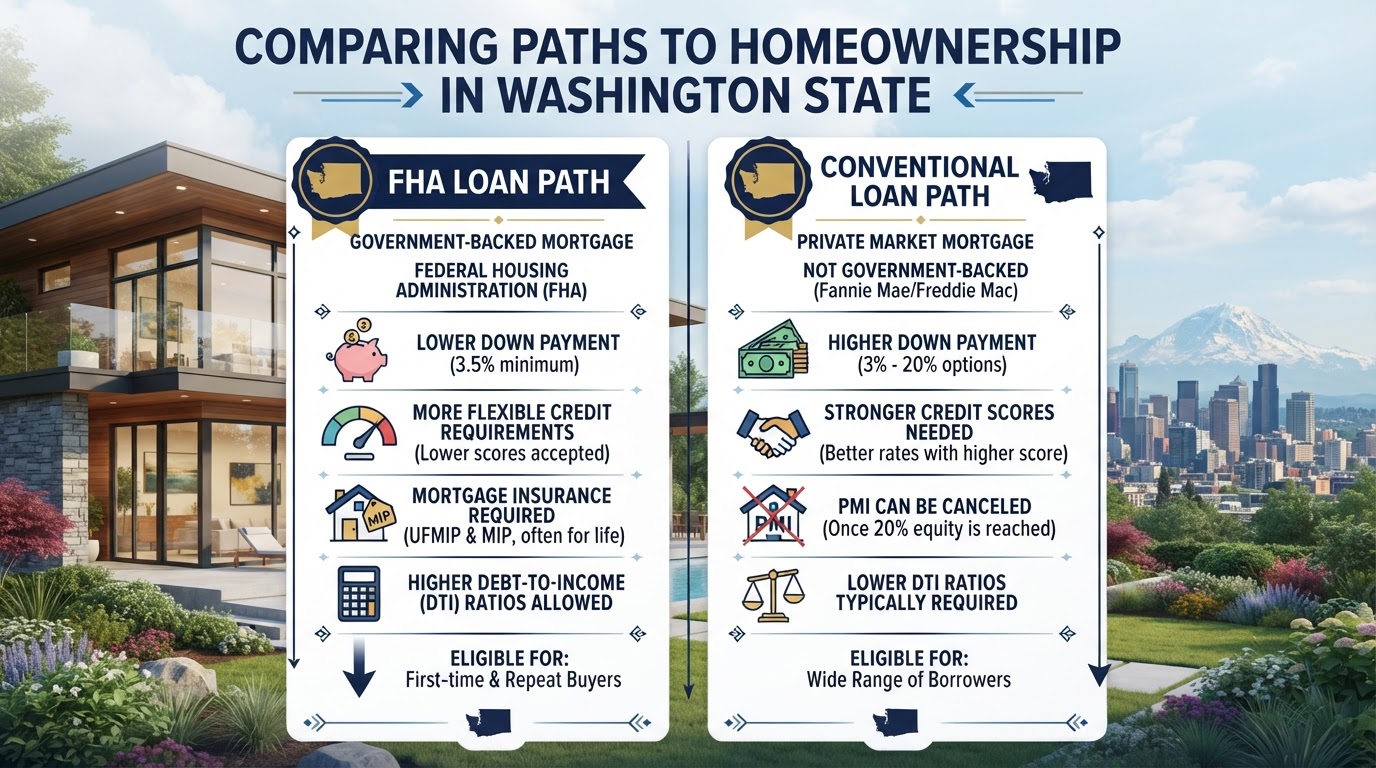
FHA vs Conventional Loans in Washington State: Which Is Right for You?
Comparing down payments, mortgage insurance, credit requirements, and costs to help Washington buyers choose between FHA and conventional financing.

7 First-Time Homebuyer Mistakes to Avoid in Washington State (And How to Dodge Them)
From underestimating closing costs to skipping the pre-approval, here are the most common first-time buyer mistakes in Washington and exactly how to avoid each one.

Condo vs. House in Washington: Which Is the Smarter First Purchase?
HOA fees, appreciation, maintenance, and lifestyle the real pros and cons of buying a condo versus a single-family home for Washington first-time buyers.